

American Car World article vol.2: What is the factor behind the Crow's Nest's sturdiness?
Apr 27, 2020

We spoke to Ligress, the seller of the popular rooftop tent.
RIGRES Rooftop Tent vol.2
What is the reason for the Crows Nest's robustness?Continuing from last time, in part 2, we asked about the advantages of Crow's Nest.
Updated: 2020.02.21 Text by Eiji Ishiyama Photos by Akio Koga / Regress
Designed to withstand bad weather
Last time we introduced an article about installation, but this time we've covered the features of the tent itself, such as the material and strength.
Even though it's a rooftop tent, it's only used after the vehicle is parked, so you might not be particularly interested in how strong it needs to be. That's what I thought before the interview, but after hearing about it, I was reminded that construction is important in everything.
Even a single tent reflects the maker's philosophy, which is very similar to the strength and performance of the exterior body parts, such as body rigidity, aerodynamics, suspension control, etc., that are considered when building a new car.
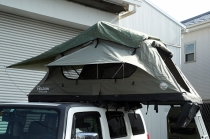
When viewed from the outside, the Crow's Nest tent looks dome-shaped. Compared to other tents, the Crow's Nest appears to have a different design, which prevents water from accumulating on the roof during rainy weather and prevents leaks.
At the same time, the design emphasizes performance, providing wind resistance on windy days. However, it is also beautiful and exudes what is known as "functional beauty."
Even though it's a rooftop tent, it's only used after the vehicle is parked, so you might not be particularly interested in how strong it needs to be. That's what I thought before the interview, but after hearing about it, I was reminded that construction is important in everything.
Even a single tent reflects the maker's philosophy, which is very similar to the strength and performance of the exterior body parts, such as body rigidity, aerodynamics, suspension control, etc., that are considered when building a new car.
When viewed from the outside, the Crow's Nest tent looks dome-shaped. Compared to other tents, the Crow's Nest appears to have a different design, which prevents water from accumulating on the roof during rainy weather and prevents leaks.
At the same time, the design emphasizes performance, providing wind resistance on windy days. However, it is also beautiful and exudes what is known as "functional beauty."

The tent's internal frame is entirely made of aluminum, and the hinges and fixtures are made of marine-grade stainless steel, ensuring long service life and excellent strength.
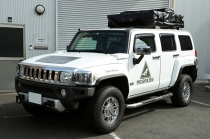 |
Last time, we covered the necessary information for installing the tent on a vehicle, but this time we looked at the materials and strength of the tent itself. The Crow's Nest installed on the H3 is an extremely sturdy tent, reminiscent of an old Mercedes-Benz tent.
|
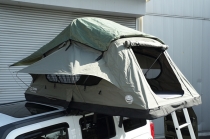 |
When you unfold the tent, you'll notice that there are no sharp edges anywhere. And yet, it's strong enough to withstand strong winds and other bad weather because it was designed for the New Zealand climate. The original dome-shaped roof design not only provides ample interior height compared to typical rooftop tents, but also prevents rainwater from accumulating at the top of the tent. |
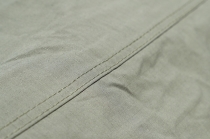 |
The entire tent is sewn with double stitching, a manufacturing method that contributes to the tent's durability.
|
Overwhelming performance that surpasses other tents
If you search for rooftop tents, you will see that many other manufacturers sell box-shaped rooftop tents, and box-shaped tents naturally have sharp corners. These tents are perfectly fine on calm days, but if there is even a little wind or rain, the boxy shape presents its own challenges.
I apologize for the amateurish way I put it, but the main reason is that the angular surfaces directly create resistance to wind and rain, and if you make it dome-shaped to avoid this problem, you have to build everything from the internal pipe frame to that purpose. This means more difficulties in production (technical, cost, etc.)
Therefore, it seems that many tents turn a blind eye to this issue, but Crows Nest has been proactive in taking measures to deal with bad weather from the start.
I apologize for the amateurish way I put it, but the main reason is that the angular surfaces directly create resistance to wind and rain, and if you make it dome-shaped to avoid this problem, you have to build everything from the internal pipe frame to that purpose. This means more difficulties in production (technical, cost, etc.)
Therefore, it seems that many tents turn a blind eye to this issue, but Crows Nest has been proactive in taking measures to deal with bad weather from the start.
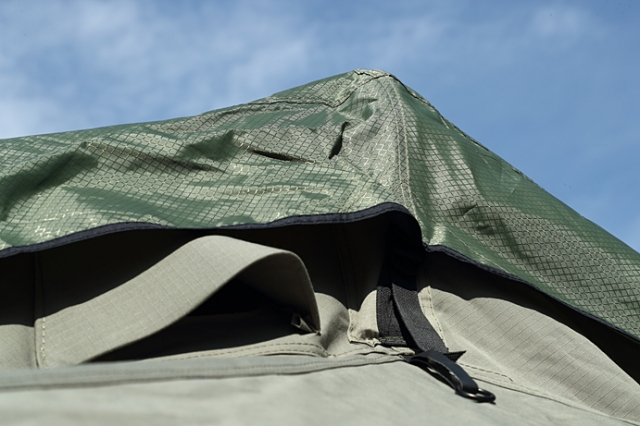
The awning covering the top of the tent, which protects the inside of the tarp from strong sunlight and rain, is made of a thick 420 denier polyester awning, which provides excellent light blocking and water resistance.
|
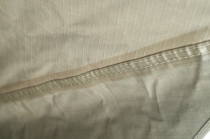
The back of each seam is reinforced with a separate piece of fabric and then double-stitched to ensure a high level of airtightness.
|
|
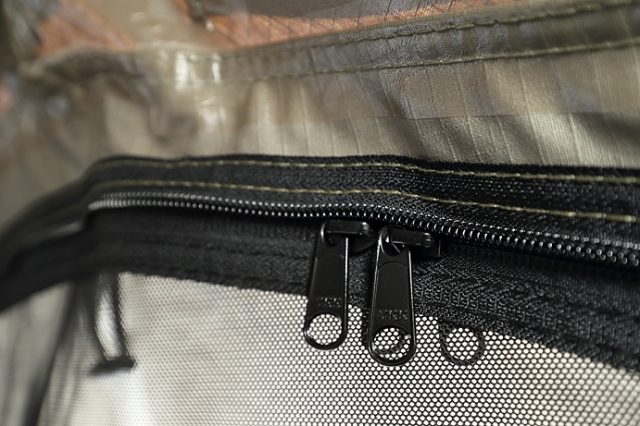
For zippers that deteriorate over time, we use YKK, a Japanese manufacturer known for its durability. |

|
The tent is made of polycotton, which makes it highly breathable and waterproof, while also making it less likely to be punctured by sparks from a campfire. |
Windproof, water-resistant, and weather-resistant
In addition, the tent has windows on all four sides, allowing you to enjoy a 360-degree panoramic view on clear days, and the roofs above the windows on each of the four corners also provide protection from the rain, making it highly practical and easy to use.
Furthermore, the tent's outer shell, which covers the frame, is double- and triple-layered for waterproofing, with each seam reinforced with a separate piece of fabric and then double-stitched to ensure a high level of airtightness. The entire tent is double-stitched, and the zippers are made by YKK, a Japanese company known for their durability.
On the other hand, the tent itself is made of ripstop fabric, a polyester/cotton blend, which makes it highly UV-resistant and durable.
Polyester/cotton blends are called polycotton, and are fabrics that combine the best of both polyester and cotton. They combine the strengths of polyester, such as durability, wrinkle resistance, and quick drying, with the texture, breathability, and moisture absorption of cotton.
Furthermore, the tent's outer shell, which covers the frame, is double- and triple-layered for waterproofing, with each seam reinforced with a separate piece of fabric and then double-stitched to ensure a high level of airtightness. The entire tent is double-stitched, and the zippers are made by YKK, a Japanese company known for their durability.
On the other hand, the tent itself is made of ripstop fabric, a polyester/cotton blend, which makes it highly UV-resistant and durable.
Polyester/cotton blends are called polycotton, and are fabrics that combine the best of both polyester and cotton. They combine the strengths of polyester, such as durability, wrinkle resistance, and quick drying, with the texture, breathability, and moisture absorption of cotton.
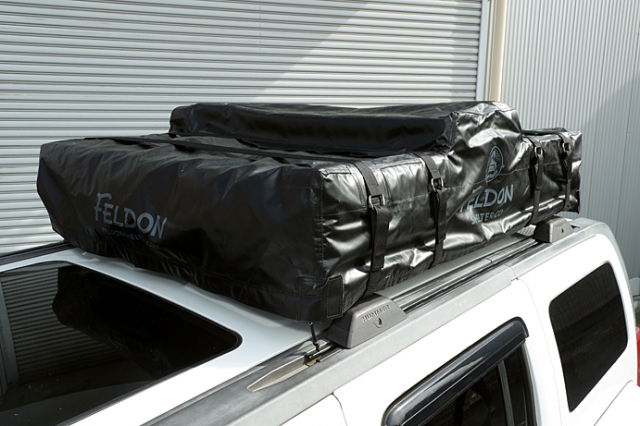
The travel cover that stores the tent is made of highly durable PCV.
|
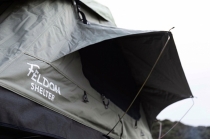
The roofs above the windows at the four corners act as rain protection, making it suitable for use in rainy weather and highly practical.
|
|
|
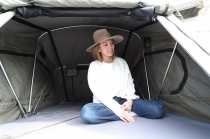
The interior of the tent is equipped with a proprietary queen-size ErgoCell high-density foam mattress (60mm thick), which is large enough for two adults to rest comfortably. |
|
Maintenance after use is also easy. If it gets wet in the rain, you just need to let it air out and dry afterwards. In a sense, maintenance is easier than with a tent used on the ground. |
Because it is robust, it is also easy to use.
Cotton has the property of expanding when it absorbs water, so when it rains and absorbs water, it fills the gaps in the fabric itself, preventing water droplets from dripping down, making it highly waterproof. On the other hand, it is resistant to fire and therefore less likely to get holes in the fabric even if sparks fly from a bonfire (polyester alone is vulnerable to fire).
In addition, there is a rain fly that covers the top of the tent. The tarp is made of a thick 420 denier polyester tarp to protect the inside of the tarp from strong sunlight and rain, and is light-blocking and water-resistant (common outdoor tarps are 70 denier, while large commercial tarps are 300 to 600 denier, so you can get an idea of how thick it is).
The tent's internal frame is entirely made of aluminum, and the hinges and fixtures are made of marine-grade stainless steel, ensuring long life and excellent strength (no plastic is used at all).
What's more, it is also highly waterproof, making it a robust product that strives to eliminate all the problems that come with rooftop tents.
Apparently, the characteristics of the country where it is made are a factor. The Crows Nest tent is made by Feldon Shelter in New Zealand, where there are still areas of untouched nature and where the weather changes so drastically that it is said that "there are four seasons in one day."
Because it is a roof tent developed in such a country, it can easily handle Japan's four seasons and has a high quality feel that comes from its high durability.
Therefore, it can be used for a long time without any problems even in Japan's climate, and because the parts are less likely to wear out or rust, it does require some maintenance such as drying it out if it gets wet in the rain (which is easier to dry than tents used on the ground), but when looking at rooftop tents as a whole, it is actually popular as a convenient rooftop tent.
In the past, there were many people who said, "I admire the quality that only a Mercedes (up to the W124) could offer, as it could travel at speeds of over 200 km/h on the Autobahn," and the Crow's Nest tent can be said to be a symbol of the kind of over-quality that Mercedes had at the time.
Personally, I think it would be a good idea to use it to watch my son playing little league baseball on the riverbank. Since it's on the roof, I should be able to see his heroic figure without being obstructed by other cars.
In addition, there is a rain fly that covers the top of the tent. The tarp is made of a thick 420 denier polyester tarp to protect the inside of the tarp from strong sunlight and rain, and is light-blocking and water-resistant (common outdoor tarps are 70 denier, while large commercial tarps are 300 to 600 denier, so you can get an idea of how thick it is).
The tent's internal frame is entirely made of aluminum, and the hinges and fixtures are made of marine-grade stainless steel, ensuring long life and excellent strength (no plastic is used at all).
What's more, it is also highly waterproof, making it a robust product that strives to eliminate all the problems that come with rooftop tents.
Apparently, the characteristics of the country where it is made are a factor. The Crows Nest tent is made by Feldon Shelter in New Zealand, where there are still areas of untouched nature and where the weather changes so drastically that it is said that "there are four seasons in one day."
Because it is a roof tent developed in such a country, it can easily handle Japan's four seasons and has a high quality feel that comes from its high durability.
Therefore, it can be used for a long time without any problems even in Japan's climate, and because the parts are less likely to wear out or rust, it does require some maintenance such as drying it out if it gets wet in the rain (which is easier to dry than tents used on the ground), but when looking at rooftop tents as a whole, it is actually popular as a convenient rooftop tent.
In the past, there were many people who said, "I admire the quality that only a Mercedes (up to the W124) could offer, as it could travel at speeds of over 200 km/h on the Autobahn," and the Crow's Nest tent can be said to be a symbol of the kind of over-quality that Mercedes had at the time.
Personally, I think it would be a good idea to use it to watch my son playing little league baseball on the riverbank. Since it's on the roof, I should be able to see his heroic figure without being obstructed by other cars.
|
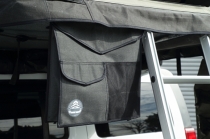
The storage pocket next to the stainless steel ladder can be used to store shoes, other small items, or other items. |
|
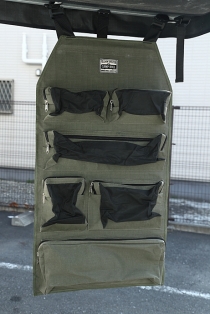
This is the new product "CAMP ROLL," sold separately. It costs 19,800 yen. It's a convenient toolbox that can be used at home and when camping, can be used to store camping gear and cooking utensils. When using a tent, it can also be hung under the tent, making it a versatile box. |


